
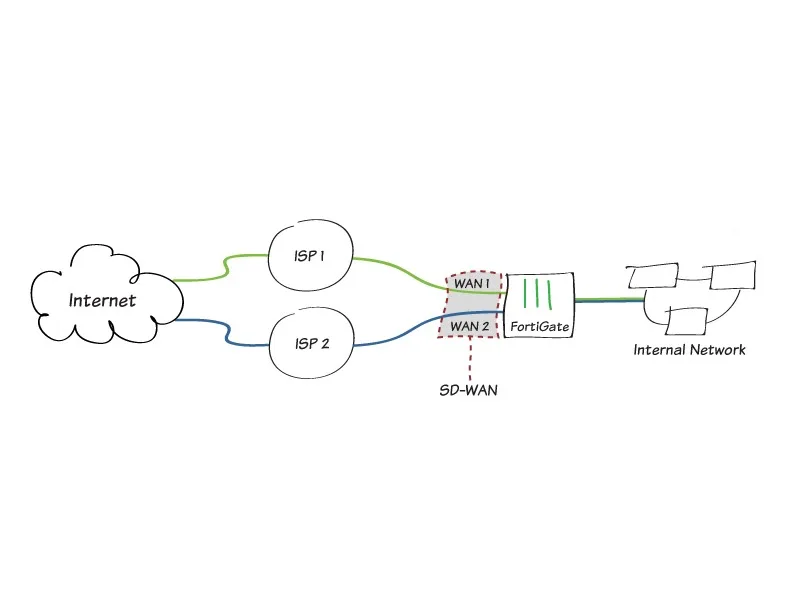
SD-WAN stands for software-defined wide area network. A wide area network is a connection between local area networks (LANs) separated by a significant distance. (This can range from a few kilometers to thousands of kilometers.) The term software-defined means that the WAN is configured and managed programmatically.
A Software-Defined Wide Area Network (SD-WAN) is a virtual WAN architecture that allows enterprises to securely connect users to applications by leveraging any combination of transport services, including MPLS, LTE and broadband internet services. SD-WAN uses a centralized control function to securely and intelligently direct traffic across the WAN. This results in increased application performance, delivering an enhanced user experience, increased business productivity and reduced costs for IT.
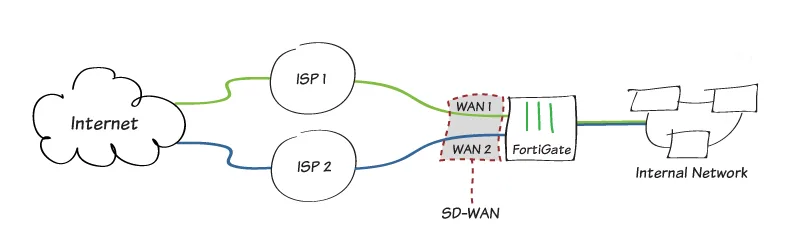
SD-WAN Architecture
SD-WAN uses a centralized control function that incorporates user-defined application and routing policies to deliver highly secure, dynamic, application-aware network traffic management. This control function enables optimal delivery paths across any combination of network transport types, providing flexible deployment options and an improved total cost of ownership.
SD-WAN architectures have three main components: the SD-WAN Edge, the Controller and the Orchestrator:
The SD-WAN Edge is where the network endpoints reside. This can be a branch office, a remote data center or a cloud platform.
The SD-WAN Orchestrator is the virtualized manager for the network that oversees traffic and applies the policy and protocol set by operators.
The SD-WAN Controller centralizes management and enables operators to see the network through a single pane of glass and set policy for the Orchestrator to execute.
These components form the core structure of SD-WAN. In addition, there are three main types of SD-WAN architecture: on-premises, cloud-enabled and cloud-enabled with backbone.
On-Premises SD-WAN is the type of architecture in which the SD-WAN hardware is located on site. Network operators can directly access and manage the network and the hardware it runs on. This makes it ideal for sensitive information that cannot be sent over the internet.
Cloud-Enabled SD-WAN connects to a virtual cloud gateway over the internet, which makes the network more accessible and provides better integration and performance with cloud-native applications.
Cloud-Enabled with Backbone SD-WAN connects the network to a nearby PoP, such as a data center, providing organizations with an extra layer of redundancy.
What Are the Benefits of SD-WAN?
Agility and Flexibility
Quickly adapt to your changing business needs with flexible hybrid WAN designs that fit your requirements at the head office and across all your branches.
Dynamic Routing
SD-WAN provides the ability to automatically route traffic to one WAN connection or another depending on network conditions or traffic characteristics. If a WAN connection cannot provide a healthy communication medium, or to balance the traffic load, it allows the use of multiple WAN connections simultaneously.
With application-aware routing, it recognizes traffic that can be sent directly over internet connections so that your business applications are delivered optimally.
Multiple Connections, Multiple Transports
SD-WAN gateways support hybrid WAN. This means that each gateway can have multiple connections using different transports (MPLS, broadband internet, LTE, etc.). For security, a virtual private network (VPN) is established on each WAN connection.
Application Performance
It optimizes the performance of your application over hybrid or internet connections with direct, highly secure access to enterprise or cloud applications.
Centralized Management
It provides more control over your network with visibility into the performance of your network and applications.
Zero-Touch Provisioning
Devices are automatically detected and configured. This simplifies deployment by reducing the time and complexity of installation.
Network Security
It provides a level of security by creating an integrated solution for network security, encrypting and tunneling the traffic coming to your data with cloud security options.
Control Costs
It provides better control over costs and capital expenditures while integrating cost-effective, scalable connectivity options such as broadband and internet into your network.