
Data loss can stem from many causes — from hardware failure to ransomware, from human error to natural disaster. The bad news is this: in many organizations backups are taken regularly but restore tests are never performed. In a real disaster, a backup that does not work is no different from a backup that never existed. The good news is that with a solid strategy and regular testing, this risk can be largely eliminated.
The 3-2-1-1 Rule
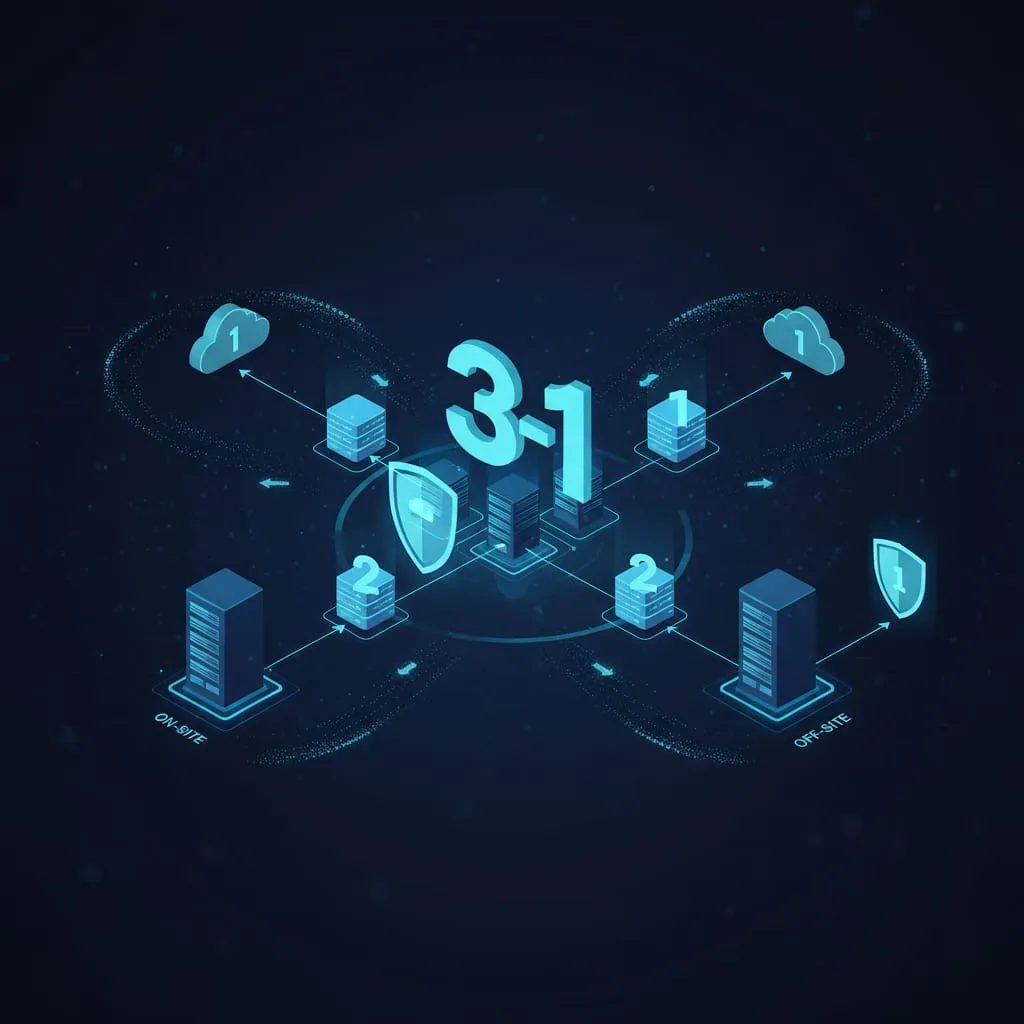
The foundation of a modern backup strategy is summarized by a simple yet powerful rule:
- 3 copies of data (1 production + 2 backups)
- 2 different media/technologies (e.g. disk + object storage)
- 1 copy off-site (cloud)
- 1 copy offline or immutable
The final "1" added to the classic "3-2-1" rule is critical against today's biggest threat, ransomware. Because modern ransomware tries to corrupt any reachable backups before encrypting. An immutable backup cannot be deleted or altered for a defined period; so even if the attacker fully controls the network, a clean recovery point is preserved.

RTO and RPO: Two Critical Targets
The right backup architecture is designed around two fundamental business targets:
RPO (Recovery Point Objective): How much data loss can you tolerate? If the RPO is 1 hour, backups must be taken at least hourly. For critical systems requiring a sub-second RPO, continuous data protection (CDP) or replication comes into play.
RTO (Recovery Time Objective): How quickly must you be back up after a disaster? An RTO measured in minutes requires a hot-standby disaster recovery site, while an RTO measured in hours can be met with more economical solutions.
Disaster Recovery (DR) and Business Continuity
Backup stores a copy of the data; disaster recovery (DR) ensures an entire system can be brought up quickly at another location. A mature DR strategy includes regular failover tests, automated replication and a clear incident management plan. The cloud makes DR far more accessible: without investing in a secondary data center, a cost-effective recovery environment can be built by replicating to the cloud.

A Tested Backup Is a Reliable Backup
The real test of a backup strategy is the moment of restore. That is why regular, automated restore tests are an inseparable part of the strategy. Monitoring that backups complete successfully is not enough; it must be proven that they can actually be restored. Monthly health reports and RTO/RPO compliance tracking present a picture that management can trust.
Backup Types: Full, Incremental, Differential
The right backup strategy requires the right combination of backup types. A full backup copies all data; it is the safest but most space- and time-intensive method. An incremental backup captures only what has changed since the last backup; it is fast and efficient but lengthens the restore chain. A differential backup captures what has changed since the last full backup; restoring is simpler. A typical approach combines a weekly full backup with daily incrementals to provide both efficiency and reliability.
Microsoft 365 and SaaS Backup
A common misconception is the belief that data in cloud SaaS applications (Microsoft 365, Google Workspace) is "already backed up". In fact these providers guarantee service continuity, not the long-term recoverability of your data. An accidentally deleted email, a OneDrive encrypted by ransomware or a departed employee's account can be lost permanently once the provider's retention period expires. SaaS data must therefore also be protected with an independent backup solution.
The Most Common Backup Mistakes
The most frequent mistakes seen in the field are: keeping backups on the same network/location as the production system (ransomware hits both), never performing restore tests, incomplete backup scope (forgetting newly added servers) and not encrypting backups. Each of these can render a backup useless at the very moment it is needed most. Regular auditing and automated verification eliminate these risks.
Integration with the Business Continuity Plan (BCP)
Backup and disaster recovery are the technical components of a broader business continuity plan (BCP). A BCP defines which processes are priorities in a crisis, who does what and how communication is handled. No matter how strong the technical recovery capabilities are, crisis management without clear roles and procedures will fail. That is why RTO/RPO targets must be set together with the real needs of business units.
Prioritizing critical systems is also part of this plan: not every system requires the same level of protection. The most critical, revenue-generating systems are protected with an RTO measured in minutes, while targets measured in hours can be cost-effective for less critical systems. This tiered approach directs the budget to where it is needed most.
Regular Drills: Not on Paper, but for Real
The value of a disaster recovery plan is proven only through realistic drills. Failover drills performed at least once a year reveal whether the plan actually works, whether times align with targets and whether the team is ready. Most organizations discover unexpected gaps in their first drills — and discovering this during a controlled test rather than a real crisis is invaluable. At Datnes Bilişim we do not just build the backup infrastructure; we keep this assurance continuous through regular restore tests, drills and monthly health reports.
What to Watch for in Cloud Backup
The cloud is a powerful tool for backup and disaster recovery, but it must be set up correctly. At the moment of restore, data transfer (egress) costs can create unexpected line items, so the cost of recovery scenarios should be calculated in advance. In addition, backups in the cloud must also be immutable and encrypted, which is critical against ransomware. Key management must be planned carefully; losing the encryption key can be as devastating as losing the backup itself.
Backup Is Not a Cost but Insurance
Organizations often see backup and disaster recovery as a cost item; in fact it is the insurance of business continuity. The average cost of a ransomware attack or major data loss — including production downtime, reputational damage, legal obligations and data recovery expenses — is far above the cost of a solid backup infrastructure. The right question is not "how much should we spend on backup?" but "what would a full day of downtime cost us?". Seen from this angle, a tested and managed backup strategy is one of the wisest investments that can be made.
At Datnes Bilişim we build the architecture with Backup & Disaster Recovery Solutions and safeguard your business continuity with regular testing and monitoring via our Managed Backup Service.