
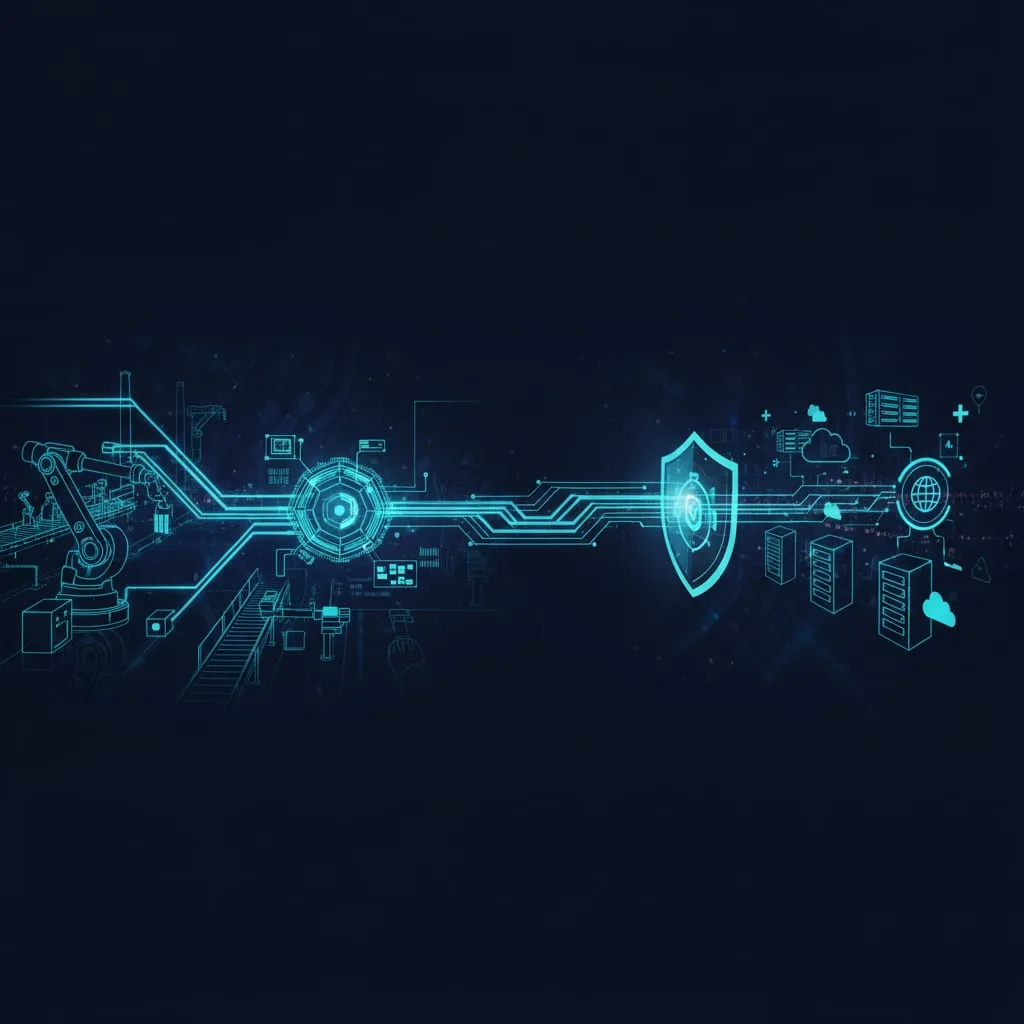
With Industry 4.0, production facilities have become complex environments where sensors, PLCs, SCADA systems and robots connect to the enterprise network. While this convergence offers great efficiency, real-time traceability and data-driven decisions, it also exposes previously physically air-gapped operational technology (OT) systems to cyber threats. The factory floor now has as much attack surface as enterprise IT.
Why Is OT Different from IT?
In the IT world the order of priorities is usually confidentiality, integrity, availability. In the OT world this order is reversed: safety and availability come first. Stopping a production line for an instant update or restart is often impossible; an outage can mean millions in lost production or a risk to human safety.
OT systems are also designed to remain in the field for decades; legacy operating systems, unpatchable devices and proprietary protocols are common. That is why OT security must be built not by directly copying IT tools, but with non-disruptive methods suited to the reality of the plant floor.

The Core Building Block: Segmentation
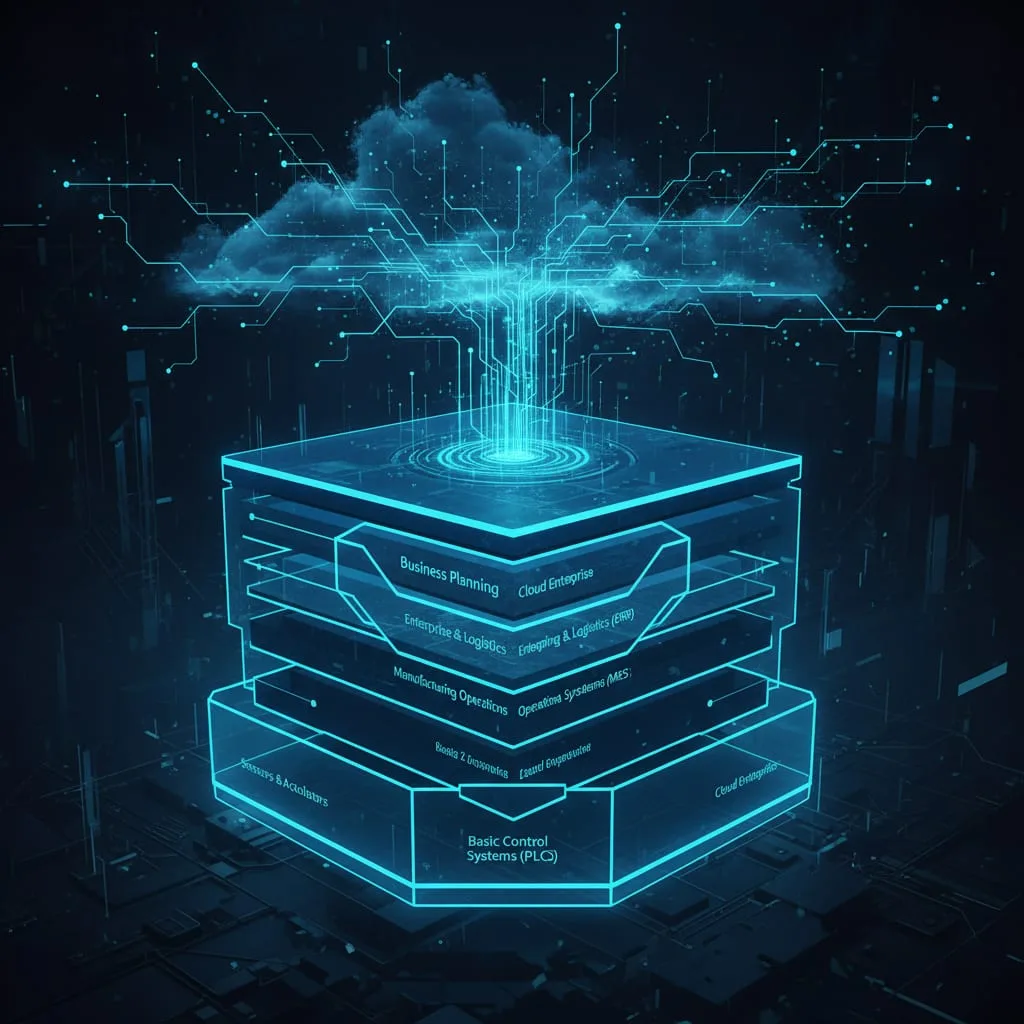
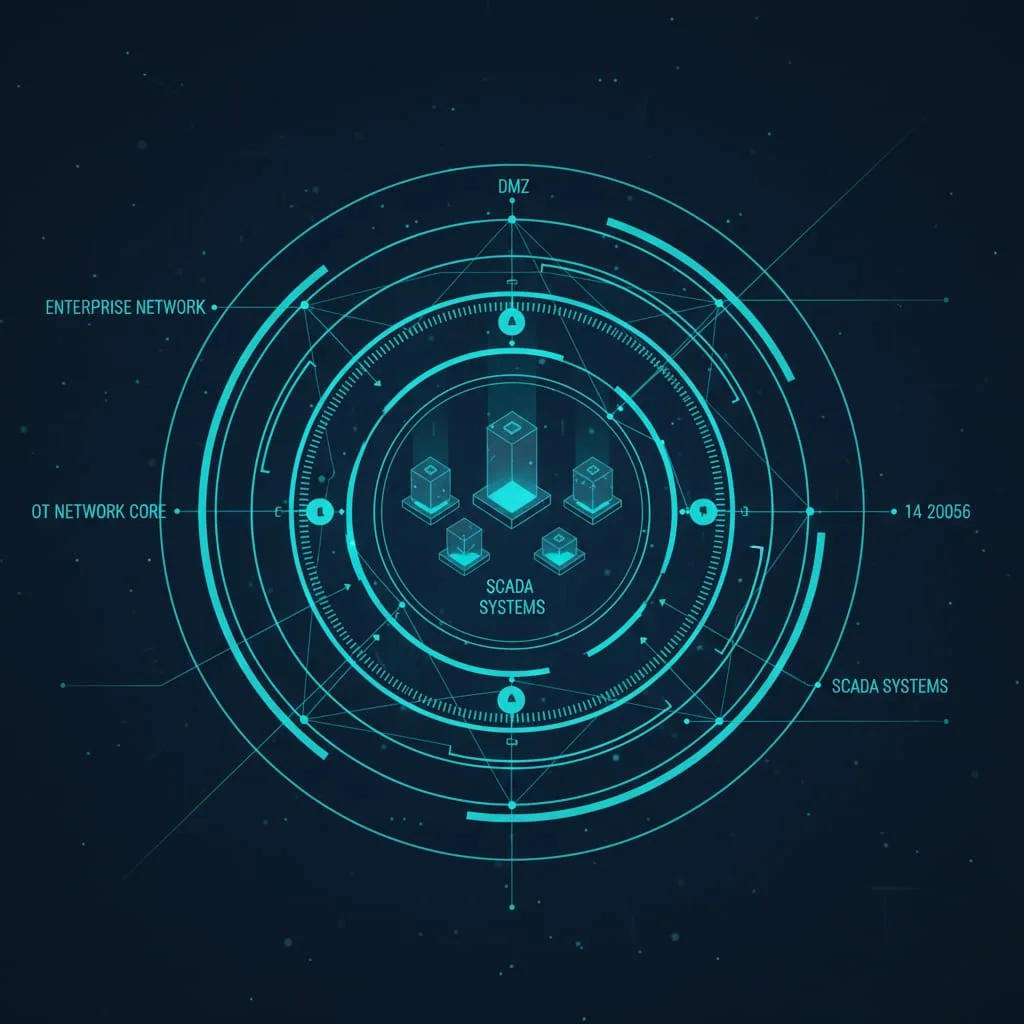
At the heart of industrial cybersecurity lies proper network segmentation. The common reference, the Purdue model, divides the plant into layers: field devices, control systems, operations management and the enterprise network. Security zones and DMZs placed between these layers prevent an attack from spreading from the office network to the production line.
Alongside segmentation, passive monitoring is critical: without disturbing OT traffic, merely listening builds an asset inventory and detects anomalies. This provides visibility without disrupting production.
A Holistic OT Security Approach
- OT/IT network integration and secure architecture design
- Network segmentation, micro-segmentation and industrial security zones
- SCADA/ICS asset inventory and continuous vulnerability management
- Passive network monitoring and anomaly detection (without disrupting production)
- Alignment with regulations such as the EPDK ICS Information Security guide
Compliance and Regulations
In the energy, manufacturing and critical infrastructure sectors, OT security is not only a technical but also a legal requirement. In Türkiye, regulations such as the EPDK Industrial Control Systems (ICS) Information Security guide require critical facilities to implement specific security controls. A well-designed OT security program both reduces operational risk and meets compliance obligations.
Real-World Threats
Attacks on OT systems are no longer theoretical. From Stuxnet to ransomware targeting industrial facilities, many examples have shown that a cyber attack can produce physical consequences (production stoppage, equipment damage, even safety risk). Moreover, many attacks reach OT not directly but by first breaching the corporate IT network and crossing into the production network from there. This is why IT and OT security can no longer be thought of separately.
Why Is Asset Visibility Hard?
The first and most challenging step of OT security is knowing what is on the plant floor. Many facilities have hundreds of devices added over the years without an inventory; different vendors, legacy protocols and undocumented connections complicate matters. Because active scanning tools can crash sensitive OT devices, visibility is mostly achieved with passive methods — that is, merely listening to traffic. Without an accurate asset inventory, neither segmentation nor vulnerability management is possible.
Collaboration Between IT and OT Teams
As important as technological solutions is the meeting of two different cultures. IT teams focus on speed and flexibility, OT teams on stability and safety. A successful OT security program brings these two teams together around shared goals and a common language. Change management, joint incident response plans and regular drills ensure that convergence happens not only at the network level but at the organizational level too.
Can Zero Trust Be Applied to OT?
Zero Trust principles are becoming increasingly important not only for IT but for OT as well. The "never trust, always verify" approach means authorizing every device, every connection and every command on the production network too. But in OT this is applied differently from IT: because tolerance for disruption is low, deep visibility and strict segmentation come first instead of aggressive blocking. Over time, authorization and micro-segmentation for critical control commands are introduced gradually.
Remote access is a special risk area for OT: suppliers connecting for maintenance and remotely working engineers must be kept under strict control. Instead of broad agentless VPN access, secure access solutions with session recording, least-privilege and approval mechanisms should be used.
The Steps of a Mature OT Security Program
A mature program begins with asset visibility, continues with risk assessment and segmentation, and matures through continuous monitoring and incident response. On this journey, regulatory compliance (for example the EPDK ICS guide) is not a goal but a natural output of a well-designed program. What matters is placing security not in front of production but alongside it: when designed correctly, security does not threaten operational continuity but protects it. At Datnes Bilişim, on this journey from the factory floor to the enterprise network, we build a security architecture suited to the reality of the field that operates without disruption.
The Human Factor: Training and Awareness
Even the most advanced technical controls fall short when the human factor is ignored. Operators, maintenance staff and engineers on the production floor are the first line of defense for security. USB drives, unauthorized remote connections and social engineering are common routes into OT environments. Regular awareness training and clear procedures significantly reduce these risks.
A Step-by-Step OT Security Journey
In practice a mature OT security program proceeds in this order: first a comprehensive asset inventory is built through passive monitoring; then criticality and risk assessment are carried out; next, segmentation aligned with the Purdue model and secure remote access are introduced; finally continuous monitoring, anomaly detection and incident response capabilities are established. Throughout this journey, production continuity is always the priority; security controls are applied without disrupting operations and with respect for the reality of the field. At Datnes Bilişim we implement this program end to end, from the factory floor to the enterprise network, with a roadmap suited to your organization's maturity level and regulatory obligations.
Supply Chain and Third-Party Risk
In OT environments risk does not come only from within the organization; equipment manufacturers, maintenance firms and integrators also form a significant attack surface. A supplier's remote connection or update package can unintentionally carry a threat into the production network. Therefore third-party access must be strictly monitored, limited on a least-privilege basis and every session recorded. Supply chain security is an indispensable component of a modern OT security program, because the weakest link in the chain determines the security level of the entire facility.
At Datnes Bilişim, with IT/OT Digitalization Solutions and Cyber Security Solutions, we build a secure transformation from the factory floor to the enterprise network together.